Imagine a skydiver preparing for a jump - every step follows a precise routine. From checking weather and wind conditions to inspecting equipment and ensuring their mental and physical readiness, each action has a specific order and importance. Skipping a step can have serious consequences. This sequence exists to prevent avoidable mistakes, allowing the skydiver to focus on their ultimate goal: a successful jump and safe landing. Following such routines not only minimises risk but also provides a reassuring structure.
The analogy between jumping out of a plane at 2,000 metres and placing a trade at your computer might seem dramatic, but there are many parallels. In both cases, unforeseen events can occur, demanding swift decisions under pressure—sometimes with high stakes. The clearer and more focused your responses to these surprises, the faster and better your decisions will be. By carefully planning your process and establishing routines for important aspects, you free up mental capacity for the strategic thinking essential in trading.
What does that mean for me as a trader?
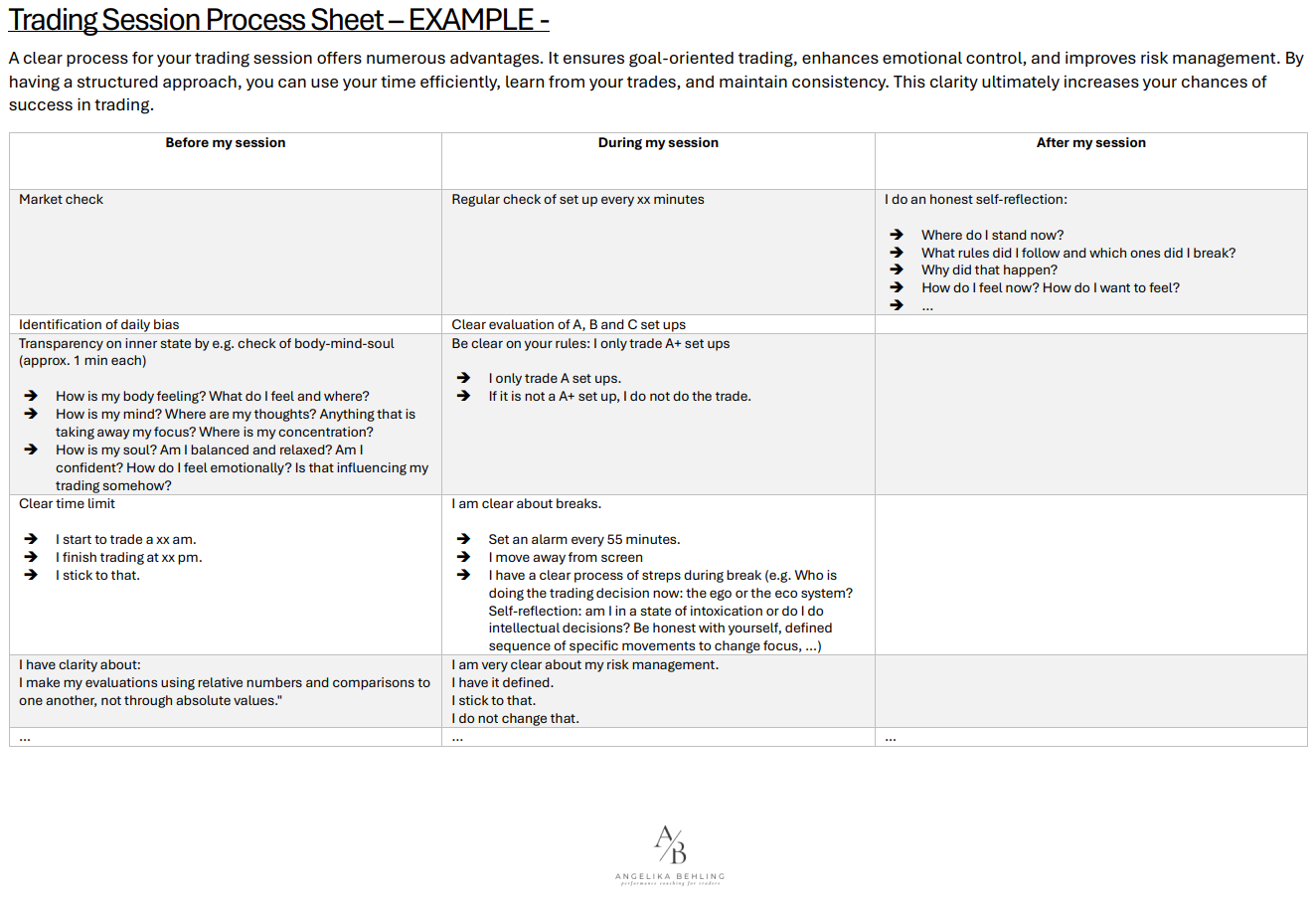
As traders, our aim is to create the best setup possible from the very beginning. In the unpredictability and volatility of the markets, we should strive for stability in the areas we can control. It's helpful to break down all the steps before, during, and after a trading session. What’s most important in each phase is personal and may differ from one trader to another.
As a coach, I recommend starting by writing down your process in detail, thinking rationally about every step. What do I do, and when? What do I need? How do I react in certain recurring situations? It’s beneficial to work through this step-by-step process with a performance coach. Often, an outside perspective helps us address problem areas we might otherwise overlook. Systematic questions from a coach can provide a real boost and significantly impact your success.
1. Pre-Session Preparation
Before beginning a trading session:
- Review your trading plan
- Analyse market conditions
- Identify your bias for the day
- Be clear about your most relevant rule
- Clarify your goals for the day or session
- Assess your inner state and balance
- Set time or trading limits
- …
It’s not about making the longest or most comprehensive checklist, but rather one that truly fits your needs. For one trader, it might be vital to repeat a core rule (“I risk no more than X% per trade”) out loud three times. For another, it’s important to take a break every hour and do a short breathing exercise or body scan. This helps you gain clarity on any mental distractions that might influence your trading decisions.
2. In-Trade Process
During a trade:
- Follow your predefined rules, including entry and exit strategies; check regularly if you are still on track
- Check your risk management
- Resist the temptation to stray from your plan due to fear or greed
- Double-check each trade for your “A+ setup”
- Be clear on who or what is making the trading decision: your logical mind, your emotions, or your ego?
- …
By having a structured process, you can maintain discipline and stay focused, even in volatile markets. Depending on your trading patterns, strengths, weaknesses, and recurring behaviours, it can be helpful to dig deeper and clarify your thoughts and actions before, during, and after each trade.
3. Post-Trade Reflection
After every trade, take time to analyse your performance:
- What went well?
- What could be improved?
- What do I need more of?
- Did you stick to your rules? Was that easy or difficult? If not, why?
- What would you have needed to follow your rules?
- Were there any strong emotions or reactions? When did you feel them? What was their consequence?
This reflection is an opportunity to learn, grow, and continually improve your trading journey. It’s how you get better with every trade.
Minimising the Impact of Emotions
By establishing a clear structure and routine, traders can significantly reduce the negative impact of emotions. Here are some benefits:
- Enhanced Focus: A structured routine helps you concentrate and minimises emotional distractions.
- Increased Confidence: Knowing you have a solid process boosts your confidence and helps you stick to your plan.
- Emotional Regulation: With a clear structure, you’re less likely to make impulsive decisions based on revenge or overtrading.
My Coaching Approach
As a coach, I stress the importance of these routines with my clients. I help you to develop your personalised trading plans, pre-trade rituals, and post-trade reflection practices, while building the discipline to stick with them. Through this structured approach, many of my clients have reported improved trading performance, greater emotional balance, and a stronger sense of control over their decisions. Becoming a successful trader is not just about strategies—it’s about cultivating the right mindset and habits.
Case study
Rupal, a passionate trader who had been struggling with inconsistent results for over a year, reached out to me in 2023. Despite her knowledge of the markets, she often found herself overwhelmed by emotions during trades, leading to impulsive decisions that negatively affected her performance. She also had a tendency to constantly second-guess all the decisions she had already made, even when there was no logical reason to do so. This deeply unsettled her.
After reaching out to me for coaching, we began by establishing a clear trading process tailored to her individual needs.
Pre-Session Preparation:
Rupal learned to create a concise checklist that included specific actions:
- Review Trading Plan: Each morning, she would spend 15 minutes reviewing her trading plan to align her mindset.
- Market Analysis: She dedicated 20 minutes to analyzing key market indicators, identifying his bias for the day (bullish or bearish).
- Set Daily Goals: Rupal committed to achieving a profit target of 1% for the day and noted that she would stop trading after three consecutive losses to prevent emotional trading.
- Inner balance: Rupal stated the session with a breathing exercise of 10 minutes because she found this as her way to be fully focused.
In-Trade Process:
We developed a strict set of rules for Rupal to follow during trades:
- Entry and Exit Rules: Rupal established clear entry and exit criteria based on technical indicators.
- Breaks for Clarity: Every 45 minutes, Rupal took a 10-minute break where she played his guitar. This activity helped her relax and reset his mind, reducing the chances of emotional decision-making.
- Limit on Trades: She set a limit of five trades per day to avoid overtrading, ensuring each trade was well thought out.
Post-Trade Reflection:
After each trade, Rupal began documenting his performance with specific questions:
- Performance Analysis: She would ask himself, "Did I stick to my entry and exit rules?"
- Emotional Check: Rupal noted any strong emotions she felt during the trade, such as fear or greed, and identified their triggers.
- Lessons Learned: She reflected on what went well and what could be improved, ensuring she learned from each experience.
Measurable Impacts:
Within three months of coaching, Rupal saw a remarkable transformation:
- Her win rate improved from 45% to 65%.
- She increased her average profit per trade by 30%, going from $200 to $260.
- Most importantly, Rupal reported feeling more in control and confident in his trading decisions.
By establishing a structured approach with specific steps, Rupal not only enhanced his trading performance but also cultivated a mindset that empowered him to navigate the emotional challenges of the markets.
Conclusion
In conclusion, the necessity and power of having a clear structure and process in trading cannot be overstated. Just as experienced skydivers rely on routines to minimise risks and enhance performance, traders benefit enormously from establishing their own structured approach. By fostering awareness and discipline, you can navigate the emotional landscape of trading with confidence and clarity.
Now it’s up to you to make this approach your own!
Why This Matters to You
Mark's story is a testament to the power of targeted coaching and emotional intelligence in trading. If you find yourself struggling with revenge trading or similar challenges, know that you are not alone. As a performance coach, I can help you identify your emotional triggers, develop effective strategies, and build the resilience needed to thrive in the trading world.
Are you ready to take control of your trading journey? Let’s work together to unlock your full potential and achieve lasting success. Contact me today to start your transformation!